Dr. Miklos K. Radvanyi
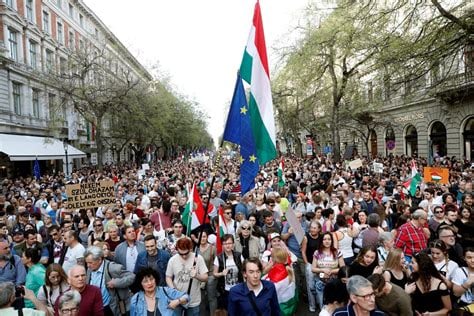
Hungary is scheduled to hold parliamentary elections on April 12, 2026, when voters will elect the 199 members of the National Assembly, the country’s unicameral legislature. The election, the tenth since Hungary regained its independence from four decades of Soviet military occupation in 1990, will determine whether Prime Minister Viktor Orban and his ruling FIDESZ-KDNP alliance will remain in power after tyrannizing the Hungarian people since 2010. The major competitor is the TISZA Party, led by Peter Magyar, himself a former government insider, who emerged in early 2024 as the primary challenger to the current Prime Minister.
Sixteen years of Orban Viktor’s tyrannical reign has been more than enough for a political project to reveal its true character. It is also long enough for campaign promises to be tested against results, for rhetoric to be weighed against reality, and for power to leave deep imprints on the nation’s institutions. Today, the verdict confronting Hungary is stark: what began as democratic mandate has evolved into a system designed not merely to govern, but to be maintained by ubiquitous oppression in perpetuity.
When Viktor Orban’s FIDESZ Party returned to power in 2010 with a constitutional supermajority, following its defeat in the 2002 elections, they promised national renewal after economic crisis and political vacillations. Hungarian were also told that strong leadership would restore political stability, economic progress, and protect national sovereignty. Instead, after sixteen years under Viktor Orban’s Tyranny cum Gangsterocracy, Hungary stands as a cautionary example of what happens when democratic authority is converted into unchecked and permanent political absolutism. What actually emerged was not a strong democratic government, but a system of extreme tyranny coupled with boundless corruption.
Essentially, Viktor Orban’s Gangsterocracy rests on three pillars: the tyrannical centralization of all powers, the monopolization of economic as well as financial powers in the hands of Viktor Orban himself, his family, and his closest loyalists, and the functional neutering of the institutions that were capable of limiting his tyrannical authority. The most visible symbol of this Gangsterocracy is the rise of oligarchic wealth among figures closely linked to the ruling elite. No example is more striking than the transformation of Viktor Orban’s dumbskull childhood friend from their village of Felcsut, called Lorinc Meszaros. Within little less than a decade, this formerly simple gas fitter has become Hungary’s richest person. Much of his expansion occurred alongside companies financed through European Union development funds. In this manner, he accumulated vast portfolios of construction firms, media outlets, banks, and industrial assets, while winning an extraordinary number of public procurement contracts without tendering or competition. In a democratic state, the market economy is based on individual merits. In those places, business fortunes rise and fall through genuine competition, innovation, and risk. In Viktor Orban’s Gangsterocracy, success has firmly followed a tyrannical formula: proximity to political power. In this context, Viktor Orban himself joked that Lorinc Meszaros’s business success has been due to “God, Luck, and Viktor Orban.” This morbidly Orbanesque confession captured the essence of a system, in which public resources have flowed almost exclusively toward a privileged circle of equally evil soulmates.
Another corruption scandal that riddled the Orban Gangsterocracy domestically as well as internationally involved his own family. The company called Elios Innovative Zrt., majority owned by his son-in-law Istvan Tiborcz, won a slew of municipal contracts to install LED street lighting across Hungary. These projects were financed overwhelmingly through European Union funds, meant to support infrastructure modernization. Investigators from the European Anti-Fraud Office (OLAF) subsequently identified serious corruption cases in many of the tenders. Their report described patterns suggesting conflict of interest, coordinated bidding, and procurement procedures structured in ways that favored Elios. Rather than allow the projects to remain under full EU scrutiny, the Hungarian government reimbursed a substantial portion of the funds involved. In addition, this case became emblematic of a much deeper concern: when political power and private enrichment intersect, accountability always disappears. Finally, the stories of ruthless corruption concerning multiple European Union development funds prove the scale of the problem.
Since joining the EU in 2004, Hungary has received tens of billions of Euros intended to modernize its infrastructure, strengthen regional economies, and close the development gap between Eastern and Western Europe. Yet repeated investigations by European institutions have raised alarms about the country’s procurement system. Hungary has consistently recorded one of the highest rates of single-bid tenders in the European Union. Moreover, in some sectors of the economy, the share of single-bid contracts has been extraordinarily high. In practice, this means that public spending often occurs without meaningful market competition – an arrangement that benefits insiders, while leaving taxpayers with the bill.
The consequences have been severe. For the first time in EU history, billions of Euros in development funds intended for Hungary have been frozen over rule-of-law concerns. Yet, the most devastating results of Orban’s Gangsterocracy are two core issues: for many years now, Hungary has been the infamous champion of corruption and the poorest country in the European Union.
Yet, the malicious transformation of Hungary under Orban’s Gangsterocracy extends beyond economics. It has also reshaped the country’s information landscape too. In 2018, hundreds of pro-government media outlets were consolidated into a single conglomerate known as the Central European Press and Media Foundation. Newspapers, television channels, radio stations, and online portals were effectively merged into a coordinated media structure closely aligned with the government’s narrative. Again, this merger bypassed normal competition review after the government declared it a matter of “national strategic importance” – a laughable justification on its own. The result is a media environment, in which much of the country’s information ecosystem repeats ad nauseam government propaganda.
Institutional independence has suffered similar erosion. Over the past fifteen years, the constitution has been more than ten times amended, the judiciary reorganized, and key regulatory bodies staffed by mostly incompetent nobodies, but closely aligned with Viktor Orban and his pawns. Electoral laws have also been manipulated in ways that favor FIDESZ, while state resources have increasingly blurred the line between government communication and political campaigning.
In this manner, democracy and the rule of law have completely disappeared. Adding insult to injury, Hungary’s universities have also suffered from unbridled political centralization. The forced relocation of the Central European University from Budapest to Vienna sent a powerful signal about the limits of academic freedom under Orban’s Gangsterocracy. Many public universities were later transferred into foundation by boards populated with Orban’s close political allies, opening the door to even more outrageous corruption. Clearly, Hungary has become a tyranny. This is the defining legacy of the Orban era. Needless to say that this hopeless plunge into the deepest levels of existential hell will carry devastating long-term consequences.
Unquestionably, the new TISZA Party government, provided that they defeat Viktor Orban’s Gangsterocracy, will have a great number of daunting tasks ahead of itself. Most importantly, they must realize that every nation has a mission in the global context of the community of nations. Therefore, domestically the new government must restore constitutional democracy and the rule of law. To accomplish these objectives it must reestablish judicial independence, constitutional oversight, the independent regulatory system, and fair electoral rules. Second, it must eradicate corruption and reestablish transparency. Third, rebuild relations with the European Union. Third, it must stabilize the economy and the country’s finances. Fourth, it must restore the independence of the information environment, especially the independence of the media. Fifth, it must undertake local government and administrative reforms. Sixth, it must restore public services in education, health care and civil services.
Even more generally, ego-driven politics must end and strategic thinking must emerge. In foreign affairs, the new government must realistically assess Hungary’s place and role within the European Union as well as NATO, forgetting about the idiocy of Viktor Orban’s “Sovereign Autonomy” and his self-serving, politically corruption-laden “Eastern Opening” to the Russian Federation and the People’s Republic of China. Hungary’s long-lasting agony must end. The only way to achieve this objective is to restore sanity and stability – and, in the near future, social normalcy to Hungary.